The UV Index Explained: What Each Number Means
A plain guide to the 0 to 11+ UV scale, the shadow rule and what to pack for a day outside.
We may earn a commission when you buy through links on this page, at no extra cost to you. This does not change which products we cover. How we make money.

The UV Index is a daily forecast of how strong the sun’s ultraviolet rays will be. The US version follows World Health Organization guidelines and runs from 0 to 11+. Higher numbers mean skin and eyes can be harmed faster.
What each level means
| UV Index | EPA level | What the EPA advises |
|---|---|---|
| 0 to 2 | Low | Little protection needed for most people. Wear sunglasses on bright days and watch for reflection off snow, sand and water. |
| 3 to 7 | Moderate to high | Seek shade from late morning to mid-afternoon. Wear protective clothing, a wide-brimmed hat and sunglasses, and use broad spectrum SPF 15+ sunscreen. |
| 8+ | Very high to extreme | Take extra precautions. Unprotected skin can burn quickly. Try to avoid the sun in the middle of the day. |
The shadow rule
No forecast handy? The EPA’s quick check: if your shadow is shorter than you are, UV is stronger, so cover up and find shade.
Sunscreen basics from the FDA
- Use broad spectrum SPF 15 or higher, and reapply at least every 2 hours, more often after swimming or sweating.
- No sunscreen is waterproof. Labels can only claim water resistance for 40 or 80 minutes.
- Use about 1 ounce, roughly a shot glass, to cover the body.
- Limit time in the sun between 10 a.m. and 2 p.m., when rays are strongest.
Build a sun kit
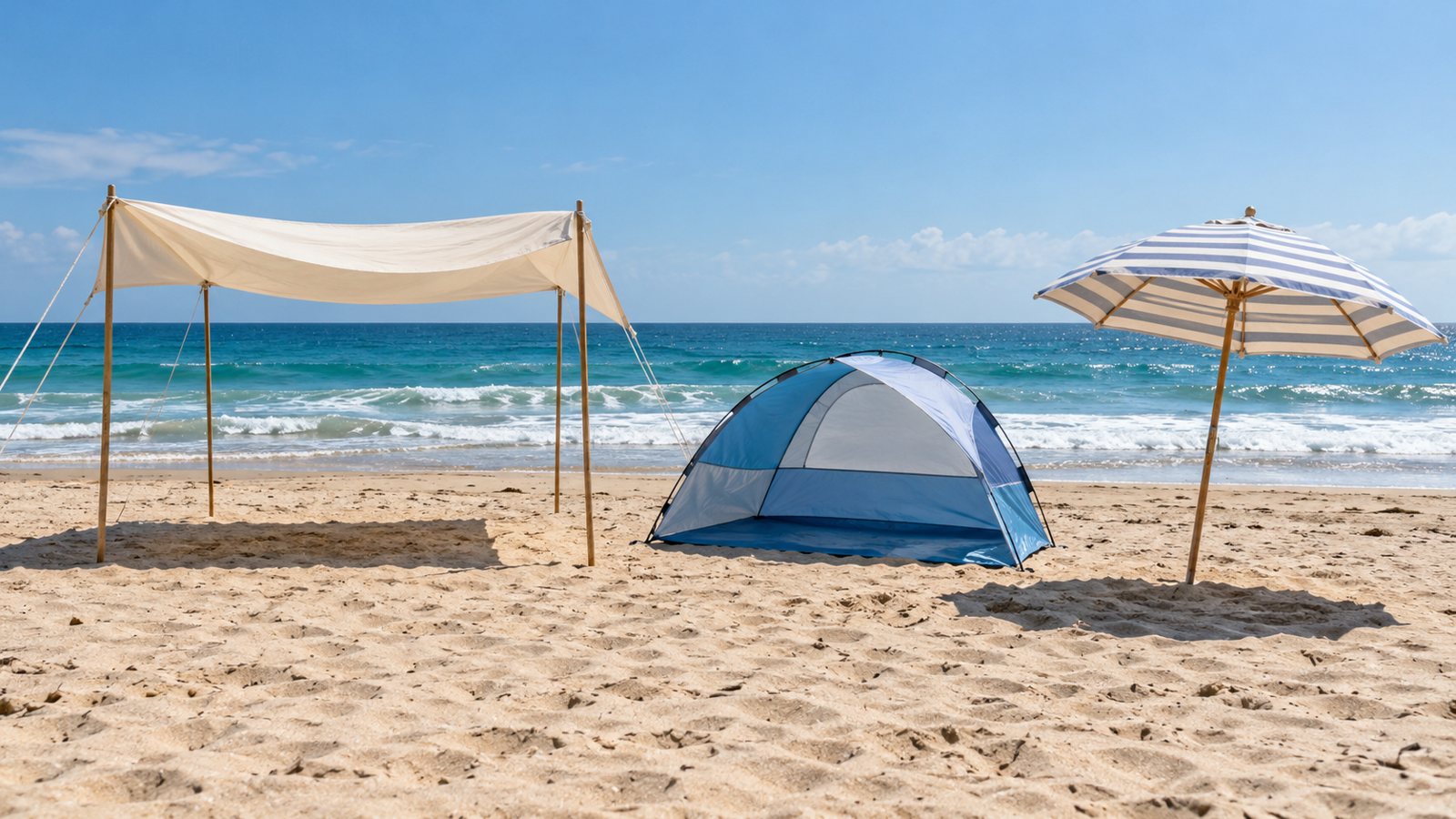
Shade and clothing do the heavy lifting on long days. A beach shade, a wide-brimmed hat and UV-blocking sunglasses cut how much sunscreen has to do. Compare shades in our beach shade roundup.
Next steps
Frequently asked questions
What is a high UV Index?
The EPA scale calls 3 to 5 moderate, 6 to 7 high, 8 to 10 very high and 11+ extreme. From 3 up, the EPA advises seeking shade around midday and using sunscreen, clothing, a hat and sunglasses.
What is the shadow rule?
The EPA says if your shadow is shorter than you are, UV levels are higher and you should protect yourself.
Is any sunscreen waterproof?
No. The FDA says sunscreens can be labeled water resistant for 40 or 80 minutes. They cannot be labeled waterproof or sweatproof.